
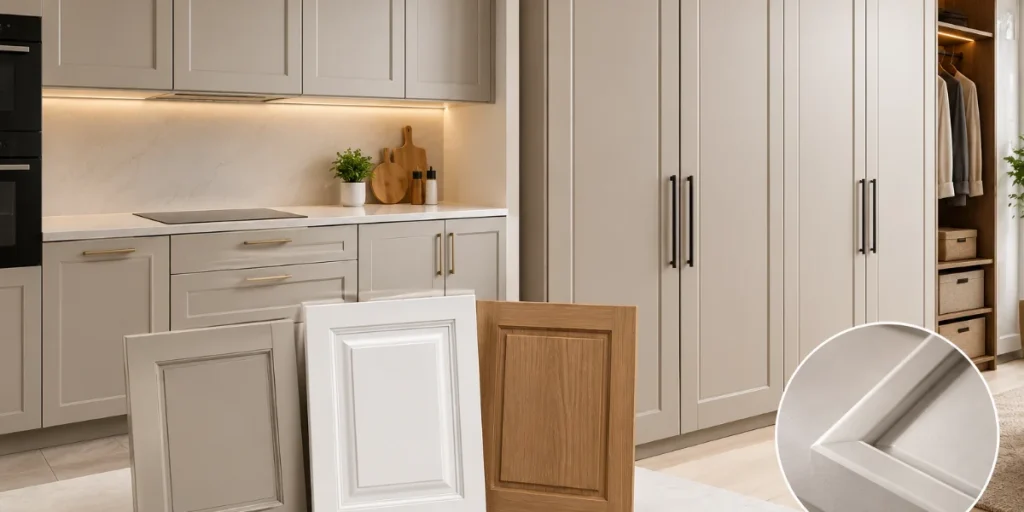
Kitchen and wardrobe doors influence the overall look of an interior, from the clean lines of a contemporary kitchen to the detailed finishes of a custom wardrobe. CNC machining allows intricate grooves, geometric patterns, and tailored profiles to be created with precision, giving furniture manufacturers and interior designers greater flexibility when developing distinctive spaces.
Ar-Rad International supports Oman’s construction and interior finishing sector with a range of board materials and decorative surface solutions. If you are searching for a kitchen and wardrobe CNC design doors manufacturer in Oman, our team can help you explore suitable materials, finishes, and product requirements for your furniture project.
CNC (Computer Numerical Control) machining employs programmed machines for cutting operations in order to achieve desired shapes, grooves, and decorative motifs per the original design. This technology allows for uniformity of detailing on all door surfaces, regardless of whether it is modern or stylistic.
Depending on the material, equipment, and machining specifications, CNC-designed doors can incorporate:
Before starting production, it is important to take notice of panel sizes, depth of cuts, edge treatment, and installation of hardware. This information helps ensure the end design of the door is perfect in terms of furniture composition and installation.
Have a design in mind? Contact Ar-Rad to discuss your preferred materials and finishes.
Selecting the right material is vital since some types of material have better compatibility with CNC processing. The substrate used should depend on the parameters of the project that require material. This includes consideration made of the complexity of the design, thickness of the board, finishes, and the method of achieving these finishes of the final panel.
Ar-Rad provides a wide selection of boards to be used for CNC processing, such as MDF boards, plywood, foam PVC boards, laminated boards, etc. Each product has unique properties; therefore, the choice of the board should be based on the specific CNC processing method to be applied.
Before finalizing a material, confirm that it supports the required groove depth, edge profile, fasteners, and finishing process.
Need help comparing board options? Ask our team about available materials and specifications.
The CNC pattern is responsible for the aesthetic features of the door, while the surface finish gives it its final appearance. Making sure that both elements coordinate with other design features such as countertops, flooring, wall finishes, and furniture will allow you to reach an interior design harmony.
Ar-Rad allows lamination using PET films, PVC films, Electron Beam (EB) films, and melamine materials. The option that is suitable will depend on the substrate being used and the processing operations, as well as the purpose of the material.
When choosing a finish, consider:
For kitchen applications, pay particular attention to moisture exposure, heat, cleaning products, and edge sealing. Product-specific technical guidance should determine the final selection.
Many different types of furniture can employ the use of CNC-designed door panels depending on their construction and type of material used.
It is essential to discuss important issues regarding project execution, like height, design, materials, and details, before the job starts to avoid mistakes.
A clear specification makes it easier to assess whether a CNC door design is practical for the project. Before requesting a quotation, prepare the following information:
Providing these details helps suppliers evaluate the project more accurately and identify any design or material limitations before production begins.
With more than three decades of experience in construction and interior finishing materials, Ar-Rad International serves customers across a range of project requirements. Our portfolio includes board products and decorative surface finishing options for furniture manufacturing, joinery, and interior fit-out applications.
We help customers explore available materials and finishes based on their design objectives and technical requirements. For CNC kitchen and wardrobe door projects, confirming the exact manufacturing service, material availability, and finishing options is an important first step.
Planning a furniture project in Oman? Contact Ar-Rad to discuss the materials and finishes you require.
From understated wardrobe profiles to detailed kitchen cabinet designs, the right combination of material, machining, and surface finish can help bring an interior concept together.
If you are looking for a kitchen and wardrobe CNC design doors manufacturer in Oman, contact Ar-Rad International to discuss your project requirements and confirm the available products and services.
Yes. A design can be developed around the existing cabinetry style, dimensions, and color scheme, provided the required pattern is compatible with the selected material and machining capabilities. Sharing photographs and measurements can help establish the design requirements.
Provide the number of doors, dimensions, preferred board material, finish, design reference, and required completion date. If you have a technical drawing or CNC design file, include it with your inquiry.
No. The achievable groove depth depends on the board thickness, material properties, pattern, and structural requirements. Deep cuts may affect the panel's strength, so the design should be checked before machining.
Matching designs may be possible across kitchen cabinets, wardrobes, and other storage furniture. Consistency depends on using compatible materials, repeatable specifications, and finishes available across the required quantities.
Choose materials and finishes rated for the intended conditions, protect exposed edges, and follow the manufacturer's installation and maintenance guidance. Areas near sinks and cooking appliances require particular attention to moisture and heat exposure.
Not necessarily, but the design must account for the chosen hardware. Hinge locations, handle placement, door weight, panel thickness, and clearance should be confirmed before machining.
CNC machining can support repeatable production when designs, dimensions, materials, and machine settings are properly specified. Actual capacity and lead times depend on the manufacturer's equipment and production schedule.
It depends on the board construction, laminate type, cutting depth, and finishing process. Machining may expose the substrate or affect the surface layer, so compatibility should be assessed before production.
Cost can depend on material type, panel dimensions, pattern complexity, machining time, finish, hardware requirements, order quantity, and delivery arrangements. A detailed specification enables a more meaningful quotation.
Ar-Rad offers board materials and decorative surface finishing solutions. Customers should confirm directly with Ar-Rad whether CNC machining and finished-door manufacturing are available for their specific project.

