
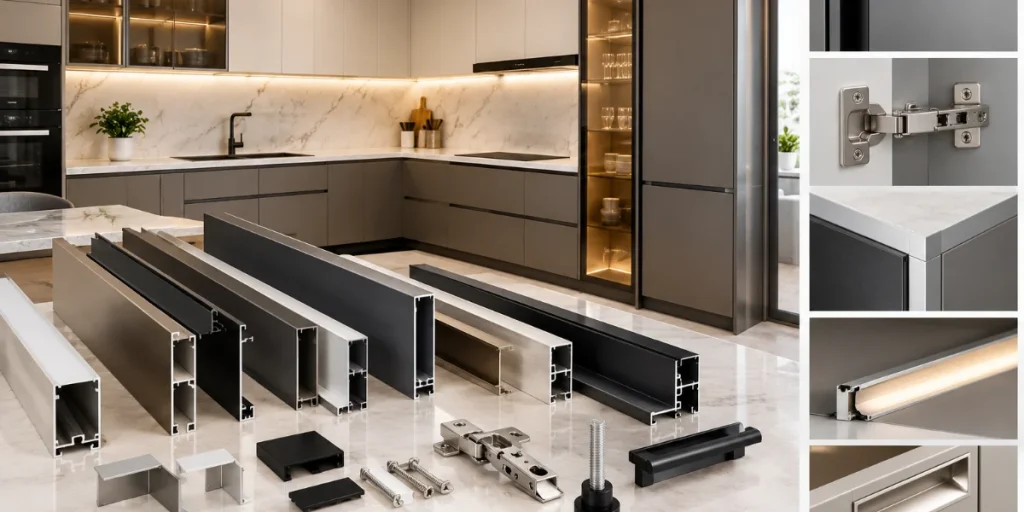
A well-designed kitchen depends on more than cabinet doors and worktops. It also consists of the profile systems and accessories, which form part of the unit’s framework and give modern furniture both appearance and functionality. From clean-edged cabinet finishes to practical fittings, selecting compatible components helps create a coordinated kitchen that meets both design and functional requirements.
Ar-Rad International provides board materials and surface finishing solutions to Oman’s construction and interior design industries. If you are looking for a kitchen aluminum profile and accessories supplier in Oman, our team can discuss your project requirements and help clarify the material and product options available.
Various kitchen furniture applications use aluminium profiles depending on their shape and measurements, as well as their intended purpose. They contribute to clean visual lines, clear edges of cabinets, and coordination of details across various kitchen elements.
When evaluating profiles for a kitchen project, consider the following aspects:
Choosing a profile depends on the cabinet design by the manufacturer. Knowing the required measurements and checking whether the chosen profile is appropriate will help avoid issues during installation.
Planning a new kitchen? Contact Ar-Rad to discuss your material and component requirements.
Kitchen accessories can make storage simpler and easier to handle. Their selection should be determined by the kitchen layout, available storage spaces, how often the cabinets are used, and the needs of the family.
Depending on the project and available product range, kitchen accessory categories to consider include
Before selecting an accessory, confirm its dimensions, load capacity where applicable, installation requirements, and compatibility with the cabinet construction.
The choice of kitchen profiles must match the design and serve the functions of the room. The right choice depends on the profile’s application, material characteristics, surface treatment, and compatibility with the elements next to it.
Consider these factors when comparing options:
If the kitchen is subject to moisture, humidity, and frequent cleaning, it is important to make sure that the finish and the material are suitable for its conditions. The specifications of each product will help in making the final choice.
Need help comparing options? Share your kitchen specifications with our team.
To achieve successful integration, profiles and fittings should be developed together with cabinetry materials and decorative finishes. Coordinating these factors from the beginning will allow for coherence and productivity in furniture production.
Ar-Rad’s product range consists of MDF, plywood, PVC foam boards, and decorative surface materials. The different kinds of lamination that the company produces include PET film, PVC film, electron beam (EB) film, and melamine finishes.
In kitchen design, it is important for a designer to understand how installed profiles will correspond with material thickness, cabinet edges, door construction, and surface covering. Ensure the components can be installed simultaneously with no issues caused by hinges and drawers.
For projects involving multiple kitchens or large cabinet quantities, finalizing samples, measurements, and component specifications before ordering can help reduce material mismatches and installation delays.
Kitchen aluminum profiles and accessories can be considered for a range of cabinetry and furniture projects, subject to product availability and technical suitability.
Commercial kitchens may have specific hygiene, durability, and cleaning requirements. Verify that each component meets the relevant project standards before specifying it.
A clear product specification helps suppliers identify suitable components and assess availability. Before requesting a quotation, prepare the following details:
Providing these details can make product selection more efficient and help reduce uncertainty during procurement.
Ar-Rad International brings more than three decades of experience in the construction and interior finishing materials sector. Our portfolio includes board products and decorative surface finishing options used across furniture manufacturing and interior projects.
We understand the importance of coordinating materials, finishes, and project requirements. For kitchen aluminium profiles and accessories, contact our team to confirm the available product range, technical specifications, and compatibility with your cabinetry plans.
Whether you are sourcing components for a residential kitchen, a modular furniture project, or a larger interior fit-out, selecting compatible profiles and accessories is an important step in achieving a well-coordinated result.
If you need a kitchen aluminium profiles and accessories supplier in Oman, contact Ar-Rad International to discuss your requirements and inquire about product availability.
Depending on the cabinet design, profiles may be used for door edges, integrated grip handles, glass cabinet frames, and decorative details. The correct type depends on the panel dimensions and intended function.
Consider the cabinet construction, door thickness, grip design, available clearance, and installation method. Confirm that the selected profile is compatible with the door and cabinet system.
Many profile ranges offer different surface finishes, but the available options vary by supplier. Request samples or finish references to check how the profile coordinates with the cabinet material.
Provide the required profile type, cross-section or product reference, length, panel thickness, quantity, and finish. Technical drawings can help clarify the exact specification.
Depending on the layout, drawer organisers, internal storage fittings, hinges, handles, and other cabinet components can improve access and organisation. Choose accessories based on the available space and intended use.
Suitability depends on the aluminum grade, surface treatment, installation conditions, and exposure. Confirm the product's corrosion-resistance specifications before selecting it for humid or frequently cleaned areas.
Some profiles can be cut to specified lengths, subject to the product design and supplier's capabilities. Confirm cutting tolerances, edge finishing, and minimum order requirements before purchase.
Check compatibility, dimensions, finish consistency, quantity, availability, lead times, and replacement-part requirements. Approving samples before a bulk order can help avoid mismatched components.
They may be compatible with certain MDF and laminated panel systems, depending on the profile design, panel thickness, and fixing method. Verify the manufacturer's compatibility guidance before assembly.
Prepare a component list with measurements, finish preferences, quantities, and project timelines. Contact suppliers to confirm their product range, stock availability, technical documentation, and delivery arrangements.

